Materials
Aramid or UHMWPE: Which Is Better for Concealable Body Armor
· 7 min read
For concealable body armor, UHMWPE wins: the fiber is stronger than aramid per unit of weight, so the same class needs less material. The pack is lighter, absorbs almost no sweat and copes better with sunlight. Aramid is a proven material, it is cheaper and handles strong heat better, but under clothing all day weight and moisture matter more.
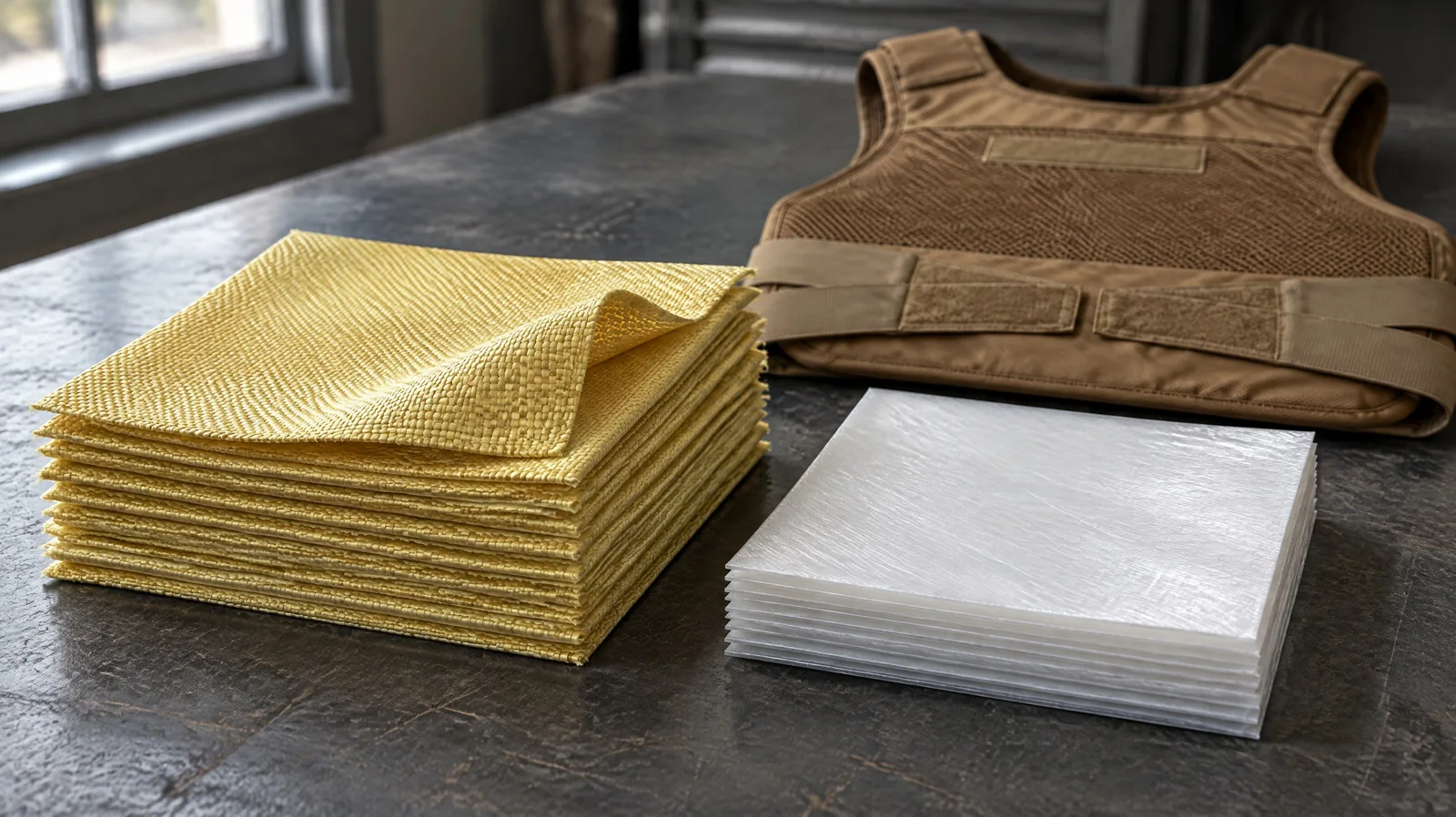
Aramid or UHMWPE: which to choose for a concealable vest
| Situation | What wins |
|---|---|
| Wearing it under a shirt all day | UHMWPE: at the same class the pack is usually lighter |
| Sweat, rain, humid climate | UHMWPE barely absorbs water, aramid needs a waterproof envelope |
| Sunlight, long service | UHMWPE is more resistant to UV and abrasion |
| The vest often stays in a hot car or near a stove | aramid: it handles strong heat better |
| Budget comes first | aramid: its packs are usually cheaper |
| Protection against a specific handgun | a draw: the GOST 34286-2017 class and the test report decide |
The protection class does not depend on the material: a Br1 aramid pack and a Br1 UHMWPE pack pass exactly the same test. The material decides something else - how comfortable it is to wear every day.
What aramid and UHMWPE are in body armor
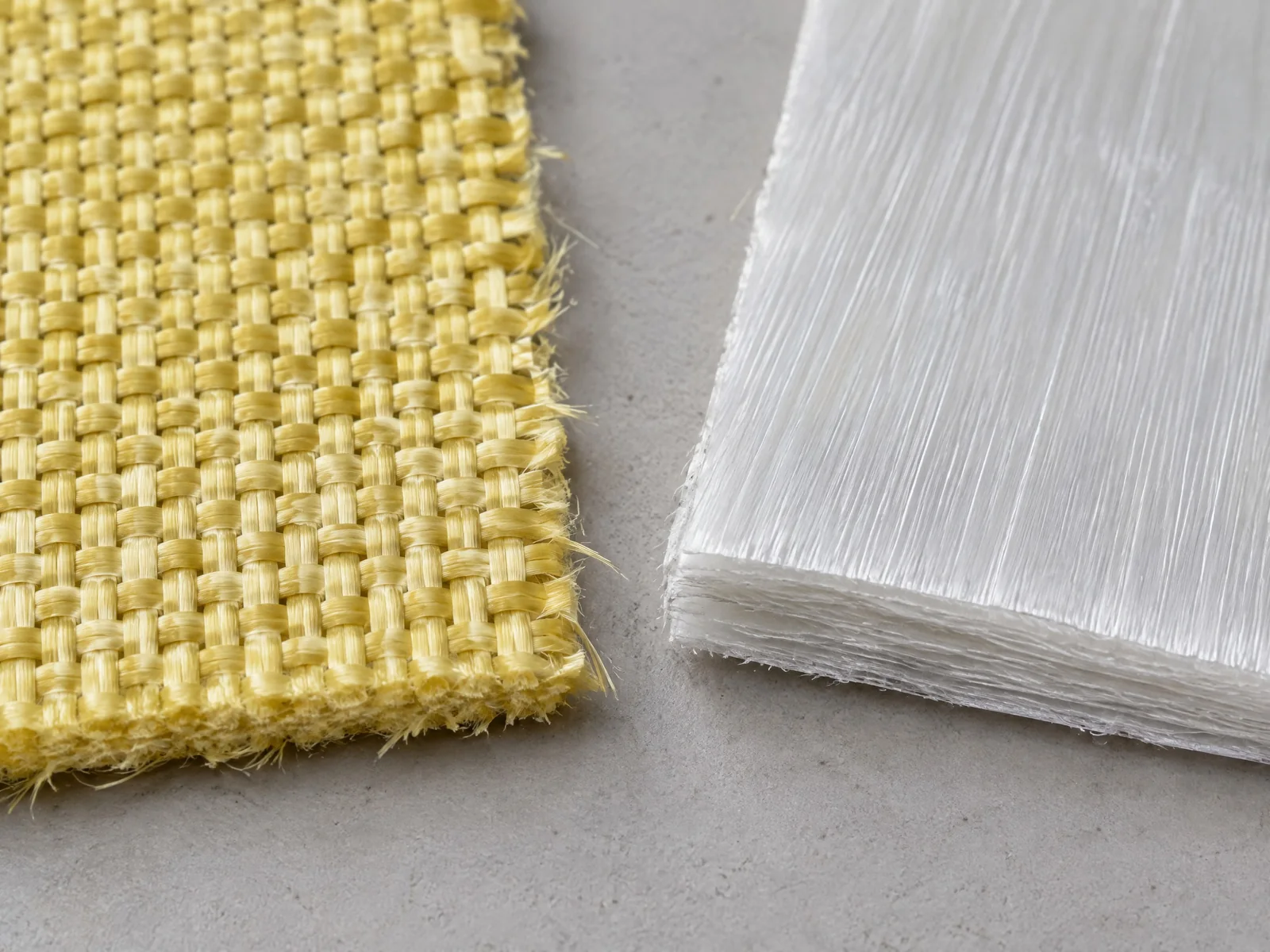
Aramid is a synthetic fiber whose yarn is woven into ballistic fabric. Kevlar is the best known aramid brand, so a "Kevlar vest" almost always means an aramid one. Body armor has been made from aramid for decades, and a pack is built from dozens of layers of this fabric.
UHMWPE is ultra-high-molecular-weight polyethylene. Chemically it is a relative of ordinary polyethylene film, but the molecules in the fiber are dozens of times longer and aligned along the yarn. That is where the strength comes from. For soft packs UHMWPE is usually made not as a woven fabric but as a sheet: the fibers lie in parallel, and the layers are bonded crosswise with a thin film.
The same UHMWPE is pressed into hard armor plates. When you read that polyethylene stops a rifle, it is about a plate, not a soft pack. A plate like that cannot be hidden under a shirt.
How aramid differs from UHMWPE
| Aramid (Kevlar) | UHMWPE | |
|---|---|---|
| Strength per unit of weight | lower | higher: the same class needs less material |
| Pack weight at the same class | heavier | usually lighter |
| Water and sweat | absorbs them, performs worse when wet | barely absorbs them |
| Sunlight | UV degrades the fiber | more UV resistant |
| Abrasion | the fiber wears faster | high abrasion resistance |
| Strong heat | does not melt | loses strength |
| Pack price | usually lower | usually higher |
| Layers | woven fabric | usually unidirectional sheet |
Ballistics and weight. UHMWPE fiber is stronger than aramid per unit of weight and lighter than water: its density is about 0.97 g/cm³ against 1.44 for aramid. The same class takes less polyethylene by weight, and at equal weight a UHMWPE pack is designed for a more powerful bullet. Testing confirms which one. For a concealable vest this is the main argument: extra weight on the shoulders is felt from the first hour.
Moisture. Aramid absorbs water, and a wet pack stops a bullet worse than a dry one. That is why aramid is sealed in a waterproof envelope, and the envelope has to be checked for damage. UHMWPE takes up almost no water, while a concealable vest soaks up sweat every day. GOST requires a pack to keep its class after getting wet, whatever fiber it is made of.
Sunlight and wear. In light, aramid turns yellow and gradually loses strength, and with constant friction the fiber wears through. UHMWPE is more resistant to UV and abrasion.
Heat. Here aramid is stronger: it does not melt. Polyethylene loses strength at temperatures that do not bother aramid, so a radiator, a dryer, an iron or a car interior in the summer sun harm a UHMWPE pack. In normal wear there is no difference: under GOST, packs are tested from minus 40 to plus 40 degrees Celsius.
Aramid or UHMWPE: what to choose on price
Aramid is cheaper, and that is its honest advantage. The difference is like choosing between a reliable budget car and a business-class car. Both will get you there, and at the same class both stop the same bullet. But on a long journey business class is easier to bear, and a concealable vest is exactly that long journey: it is worn every day for many hours.
If the vest is for a rare occasion and price matters, aramid is a sensible choice. If it will be worn constantly, under clothing, in heat and in rain, the extra cost of UHMWPE pays back in weight and moisture resistance.
Where opinions differ: flexibility and blunt trauma
Seller blogs contradict each other on these two points. The reason is the same: they compare different packs and credit the difference to the material.
Flexibility. Aramid fabric is soft, but a well-built UHMWPE pack also bends to the body. Stiffness comes from the number of layers, the stitching or bonding, and the envelope. In reviews, buyers complain about a specific vest: "too dense, doesn't bend".
Blunt trauma. The pack stops the bullet, but the impact still reaches the body: a bruise, a contusion, in a bad case a cracked rib. Some sellers claim aramid leaves a smaller dent, others say UHMWPE does. A fair comparison means testing two packs of the same class under the same conditions.
Kevlar body armor: what it protects against
The word "Kevlar" does not set a class. A Kevlar vest can be Br1, Br2 or have no class at all if the pack was never tested. What a specific vest protects against is stated in the certificate and the test report.
Soft packs cover classes S (knife), S2 (fragments), Br1 (9×18 handgun bullet) and Br2 (the more powerful 9×21). Assault rifles and rifles are Br4 and Br5, and only a hard plate stops them, whatever fiber the pack is made of. What each handgun class withstands is covered in our article "Br1 or Br2: What Each Protection Class Protects Against".
How to compare aramid and UHMWPE packs
- Class and test report. The same class means the same test. In the report, check the weapon, the cartridge, the bullet velocity and the result.
- Weight at the same area. A vest can be lighter because its pack is smaller. Ask what it covers: chest and back, or the sides too.
- Thickness. Under clothing, it is the pack's thickness that shows.
- Envelope. Waterproof or not. For aramid this question is a must.
- Service life. The manufacturer states it in the product passport: GOST sets no general service life for a fiber.
Hybrid packs with layers of both materials are checked the same way: by the documents.
Why our concealable vests use UHMWPE
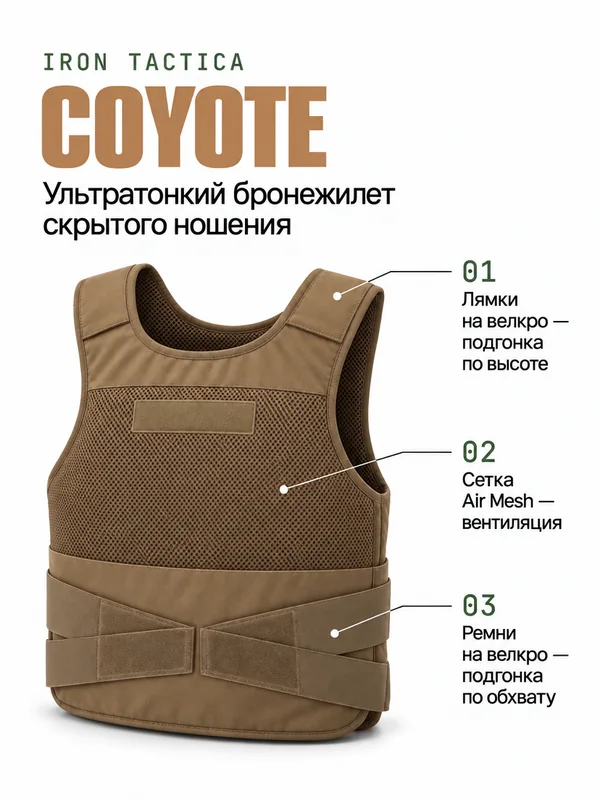
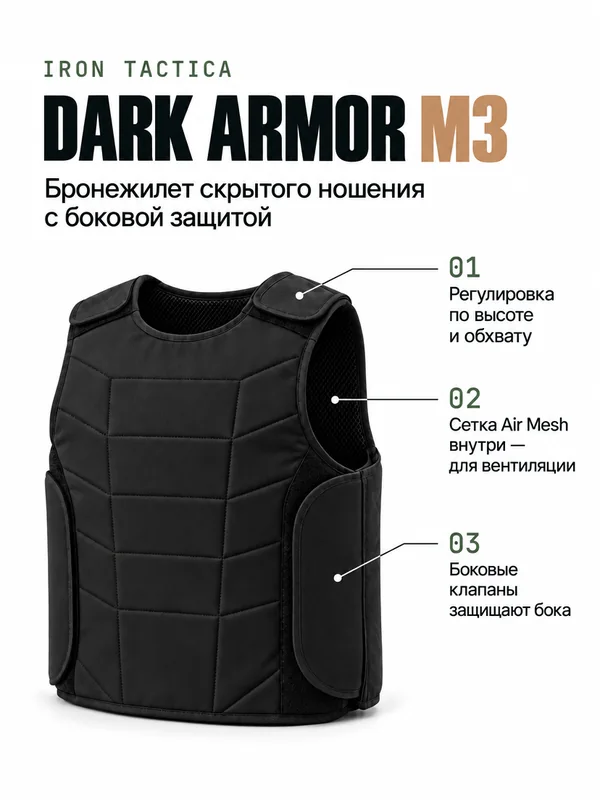
A concealable vest is worn under clothing all day, in heat and in rain, so IRON TACTICA concealable vests use UHMWPE packs. COYOTE, rated S2 and Br1, has two removable packs, on the chest and on the back, and the whole vest weighs 1.4 kg. In DARK ARMOR M-3 the packs run around the whole torso, sides included, in Br1 and Br2 versions.
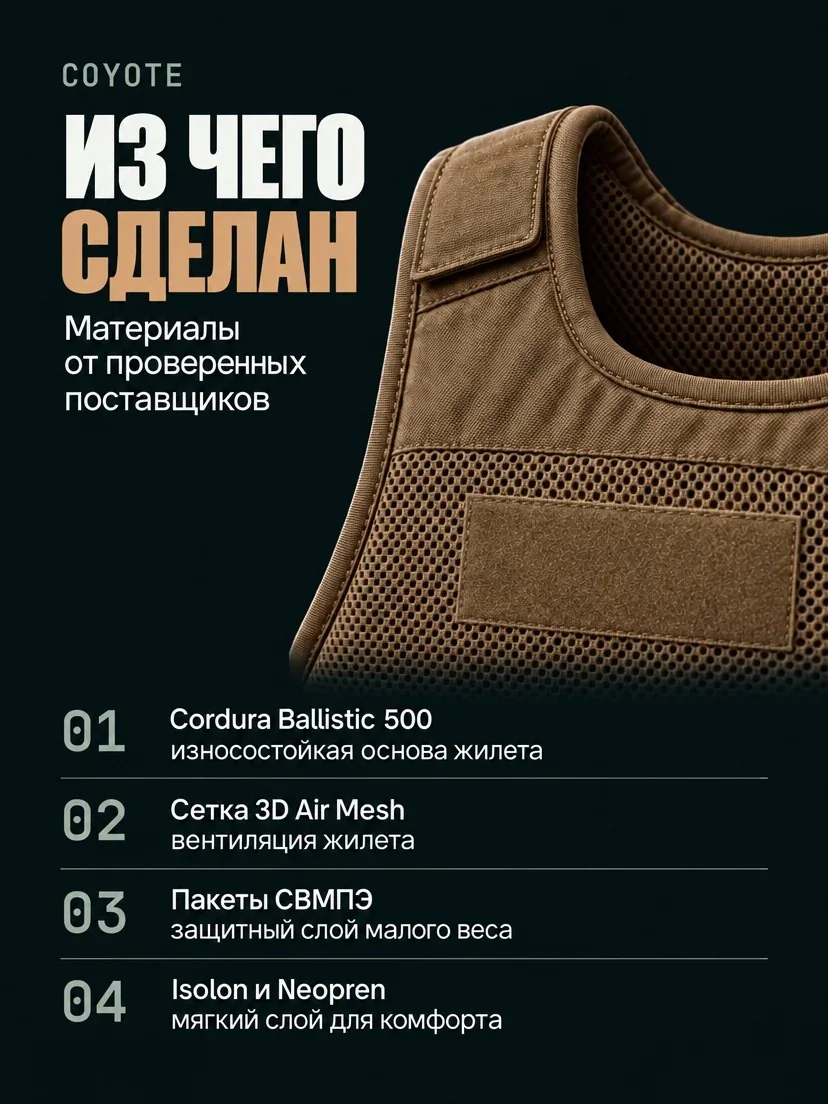
Care is simple: remove the packs before washing, wash the cover at up to 40 °C and do not iron it. Dry it in the shade, away from radiators, and do not leave the vest in a car behind glass in summer.
Want to compare our pack with another one? Call our free number 8 800 101-76-37. Tell us where and how many hours you will wear the vest, and we will suggest a model and class. We send copies of the certificate and the test report before purchase, and a scan of the certificate is in the Documents section.
Frequently asked questions
Which is better for body armor, aramid or UHMWPE? For a concealable vest, UHMWPE: the same class needs less material, the pack is lighter and is not afraid of moisture. Aramid wins on price and under strong heat.
What is UHMWPE in body armor? Ultra-high-molecular-weight polyethylene, an extremely strong fiber. It is used for soft packs and hard plates. A soft UHMWPE pack is a stack of thin flexible layers, not a plastic plate.
Are Kevlar and aramid the same thing? Kevlar is a brand of aramid fiber, and aramid has other brands too. Protection is defined not by the brand but by the class and test report of the finished pack.
Can a UHMWPE pack be washed? No. Only the cover is washed; the packs are removed and kept dry, away from radiators and sunlight.