Materials
Ceramic or UHMWPE: Which Armor Plate to Choose
· 5 min read · Andrey Sokolov
Against assault rifles and rifles with armor-piercing bullets you need ceramic on a UHMWPE backing. A pure polyethylene plate is lighter and does not crack, but on the Russian market it is most often class Br3, which is a handgun class. Compare plates of the same class, not materials.
Ceramic or UHMWPE: a quick choice
| Task | What to choose |
|---|---|
| Assault rifle, rifle, armor-piercing bullets (Br4, Br5) | ceramic with a UHMWPE backing |
| Lightest hard plate, no armor-piercing threat | UHMWPE, check the class in the test report |
| Handgun, knife, fragments | soft panel Br1 or Br2, no hard plate needed |
| Price matters more than weight | steel |
How a ceramic plate stops a bullet
Ceramic is harder than a bullet's steel core. On impact the strike face blunts and shatters the core, and the ceramic itself cracks around the point of impact. The bullet loses its shape and energy in the first millimetres of the plate.
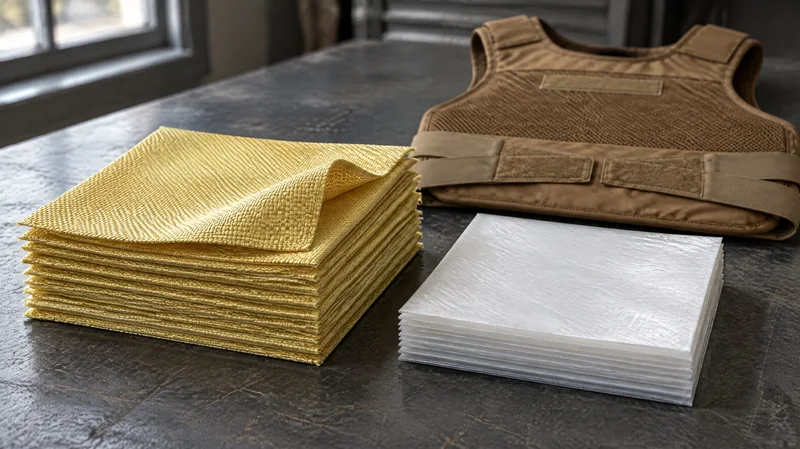
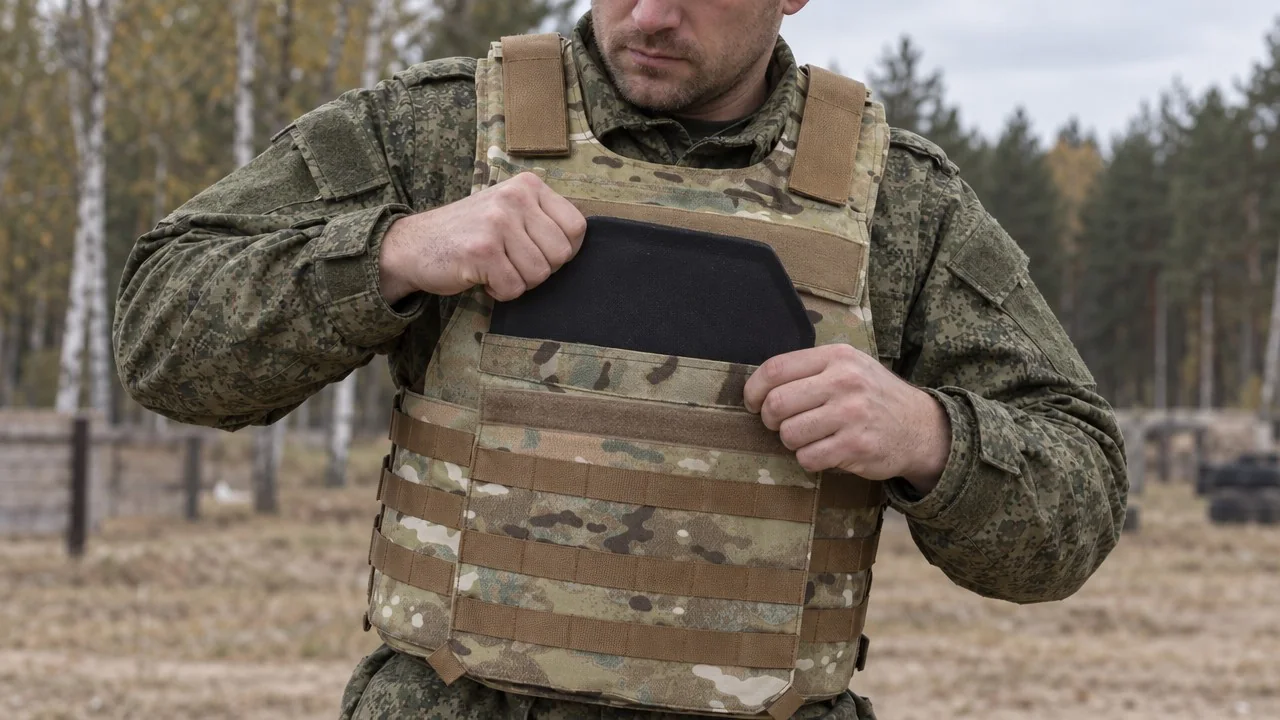
Ceramic alone cannot hold the bullet: its fragments and the remains of the core keep going. They are caught by a UHMWPE or aramid backing bonded to the inner side of the ceramic. That is why a ceramic plate is always multi-layered, and its class depends on the ceramic, the backing and how they are joined.
The ceramic is made of alumina (aluminium oxide), silicon carbide or boron carbide. Alumina is heavier and cheaper; carbides are lighter at the same class but cost more.
How UHMWPE works
UHMWPE, ultra-high-molecular-weight polyethylene, is pressed layers of very strong fibres. The bullet stretches and tears the fibres, delaminates the plate and spends its energy over a large area. The material is light: a pure UHMWPE plate floats in water.
The price of lightness is thickness and sensitivity to the threat. A sharp hardened core parts the fibres more easily than a lead bullet. Only the test report of a specific model shows whether a plate stops such a bullet.
UHMWPE Br3 plates: what they protect against
The most common pure polyethylene plates on the Russian market are class Br3. Under GOST 34286-2017, the Russian body armor standard, this is a handgun class: a 7N21 bullet from a Yarygin pistol, 7 g, 410 m/s, from 5 metres. Its energy is about 590 J.
GOST puts assault rifle bullets in class Br4 and rifle bullets in Br5. By its documents a UHMWPE Br3 plate does not protect against an assault rifle, even if it looks thick and rigid. For assault rifles and rifles, look for Br4 or Br5 in the certificate and test report. What each class stops is covered in our article on body armor plates.
Weight, thickness and heat
| Ceramic + UHMWPE | UHMWPE only | Steel | |
|---|---|---|---|
| Weight at the same class | medium | lightest | heaviest |
| Thickness | medium | thickest | thinnest |
| Armor-piercing core | the strike face destroys it | weak point, check the test report | stops it within its class |
| After a hit | cracks around the impact | dent, delamination | dent, bullet fragments fly sideways |
| Strong heat | no issue for ceramic, matters for the backing | changes its properties | no issue |
GOST checks temperature resistance from minus 40 to plus 40 °C. A closed car in the sun gets hotter, so plates with polyethylene are not left under a windscreen, by a stove or on a radiator.
What happens after a hit and how long a plate lasts
After a hit, a plate is replaced, whatever it is made of. Ceramic is left with a cracked zone, polyethylene with torn and delaminated fibres. How many hits a plate takes and how far apart depends on its design and is confirmed only by its tests.
GOST sets no service life for plates by material. The manufacturer states it in the passport and on the label. Inspect plates every 6-12 months: cracks, swelling or a peeling cover are reasons to replace them.
Which plates we use
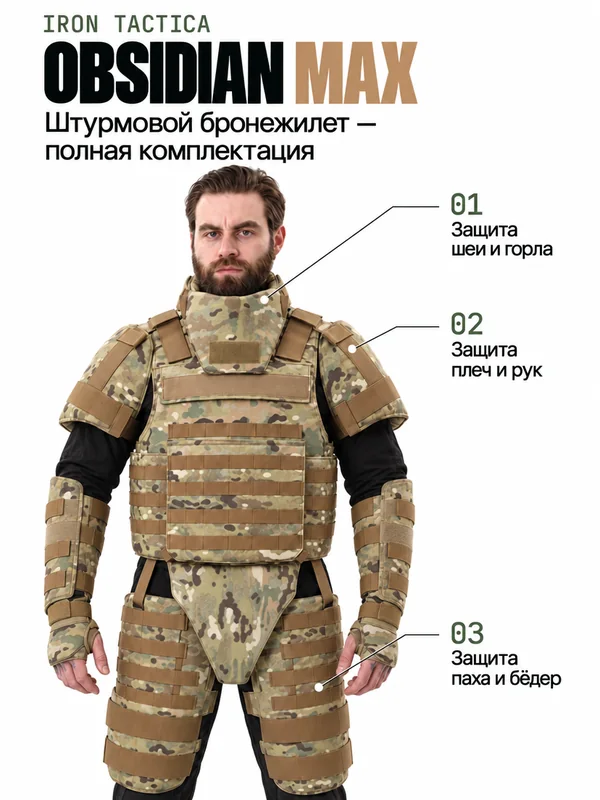
The OBSIDIAN MAX assault kit comes with two certified Br5 plates: 10 mm of alumina ceramic and 12 mm of UHMWPE. Size 250×295 mm, thickness 23 mm, 2.75 kg each.
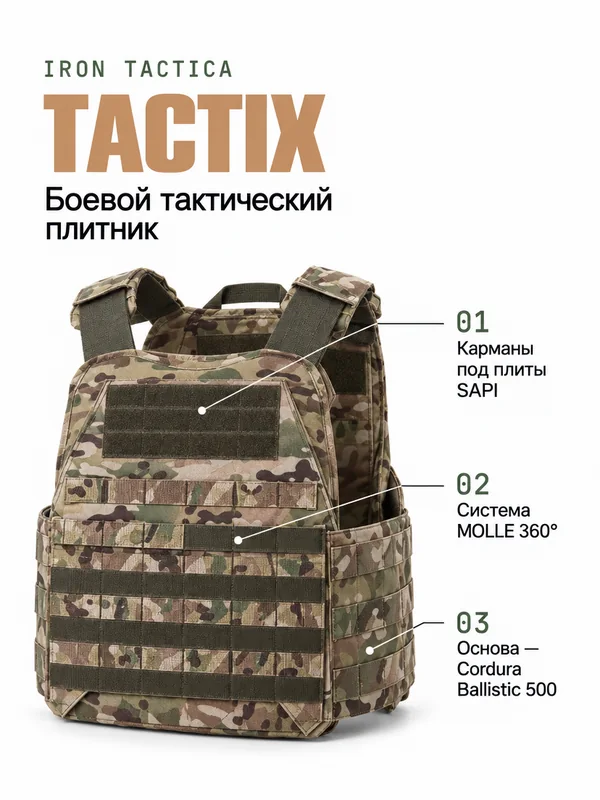
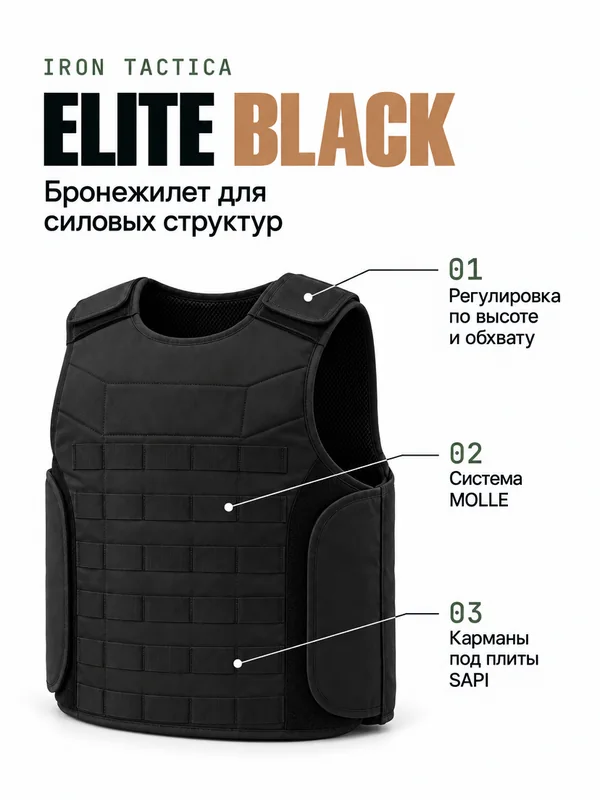
The plate pockets in TactiX, ELITE BLACK and DARK ARMOR M-5 are universal; plates for them are sold separately. Call 8 800 101-76-37 and tell us what you need protection from and how many hours a day you will wear the vest: we will suggest the plate class and material. All models are on the "Tactical and assault" page.
FAQ
Which is better: ceramic or steel? Ceramic is usually lighter at the same class. Steel is thinner and does not crack, but it is heavier, and a bullet breaks into fragments on it, so steel plates get an anti-spall coating.
Will a UHMWPE plate stop an AK? It depends on the class in the documents. A Br3 plate is rated for a handgun bullet; an assault rifle is class Br4. If a pure UHMWPE plate claims Br4 or Br5, check the test report for the bullet it was shot with.
Which ceramic is better: alumina, silicon carbide or boron carbide? At the same protection class the difference is weight and price: carbides are lighter, alumina is cheaper. The class is set by testing the finished plate, not by the name of the ceramic.
Why is a ceramic plate heavier than a polyethylene one? Ceramic is denser: alumina is almost four times denser than polyethylene, boron carbide about two and a half times. Polyethylene needs more thickness, but the material itself is lighter than water.
Can you wear a hard plate without a soft panel? Better not. The panel behind the plate stops fragments of ceramic and core and covers the area around the plate. In our vests the plate sits on top of the soft panel; more in Soft Armor Panel or Hard Plate.
Can you leave a plate in a car in summer? Better not leave a plate with polyethylene under the windscreen in the sun: strong heat changes the properties of UHMWPE. Store plates in a dry place at room temperature.