Care
How to Wash Body Armor and How Long It Lasts
· 6 min read · Andrey Sokolov
Only the carrier is washed, and only after the ballistic packs have been taken out. The pack itself is never washed, soaked or heated: moisture and heat degrade protection. The service life is written in the vest's passport, and GOST 34286-2017 sets the warranties: at least 5 years of storage and 1 year of wear.
How to wash body armor: six steps
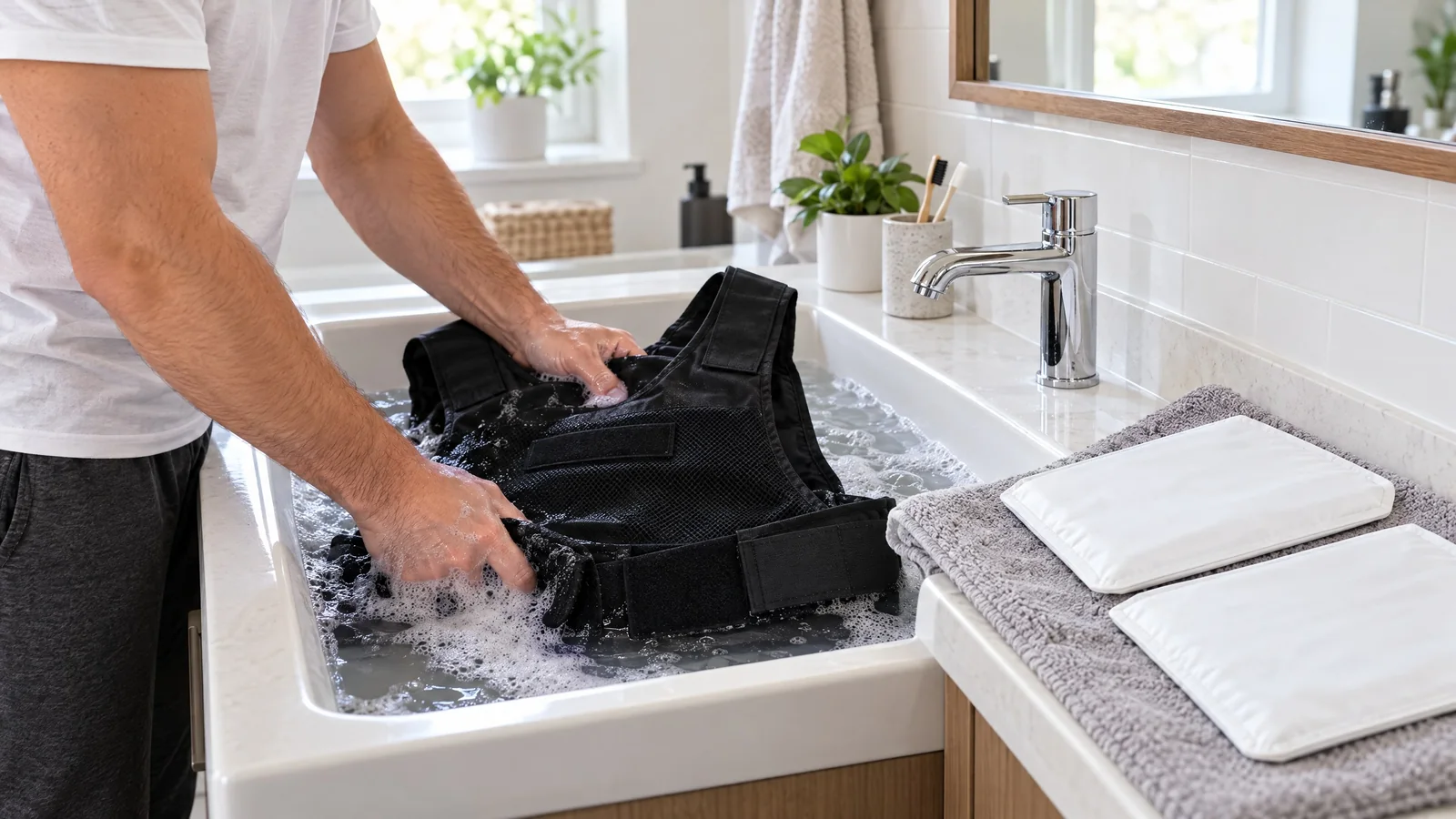
- Take the packs out. Open the carrier and remove every ballistic pack, and the plates if any are fitted. Check the pockets.
- Close the hook-and-loop. Open hook-and-loop snags fabric and collects lint.
- Hand-wash the carrier in cool water, no hotter than 40 °C, with a mild detergent. Skip bleach and fabric softener: the first damages the fabric, the second clogs the mesh.
- Machine wash - delicate cycle only, no spin, and only if your vest's instructions allow it. In doubt, wash by hand.
- Do not wring. Let the water drain, then hang the carrier or lay it flat on a rack.
- Put the packs back only into a dry carrier. Damp fabric passes water to the pack envelope.
What in body armor can be washed and what cannot
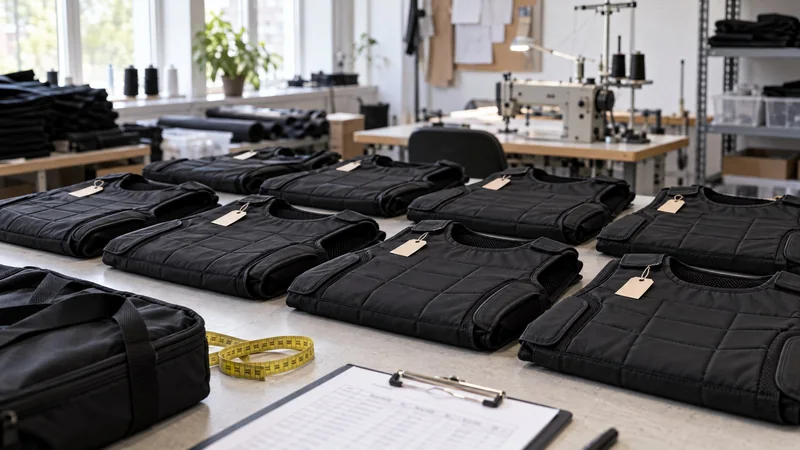
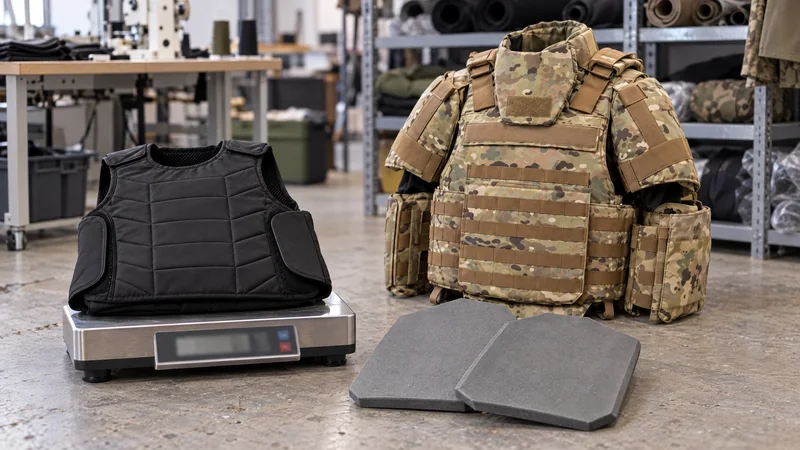
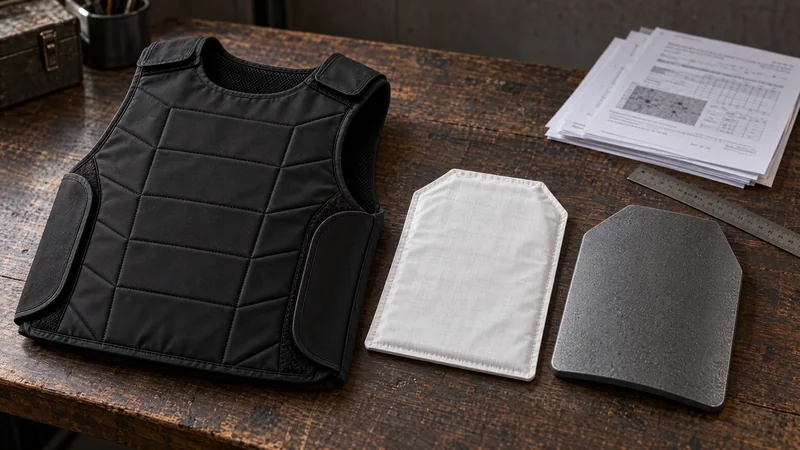
A concealable vest has two parts. The carrier - fabric, lining, mesh, hook-and-loop, straps. It soaks up sweat and gets dirty, so it is the part you wash. The ballistic pack - a stack of aramid or UHMWPE layers in its own envelope. It is never washed, soaked or dried on a radiator.
The reason is the materials. Aramid absorbs water, and a wet pack stops a bullet worse. UHMWPE barely minds water but loses strength when heated: hot water, a radiator and a tumble dryer all harm it. GOST 34286-2017 requires a pack to keep its protection after immersion in water, but that is a test for rain, not a licence to wash it. The differences between the materials are covered in the article Aramid or UHMWPE: Which Is Better for Concealable Body Armor.
Plates from the pockets are not washed either: wipe them with a damp cloth and let them dry.
How to dry body armor
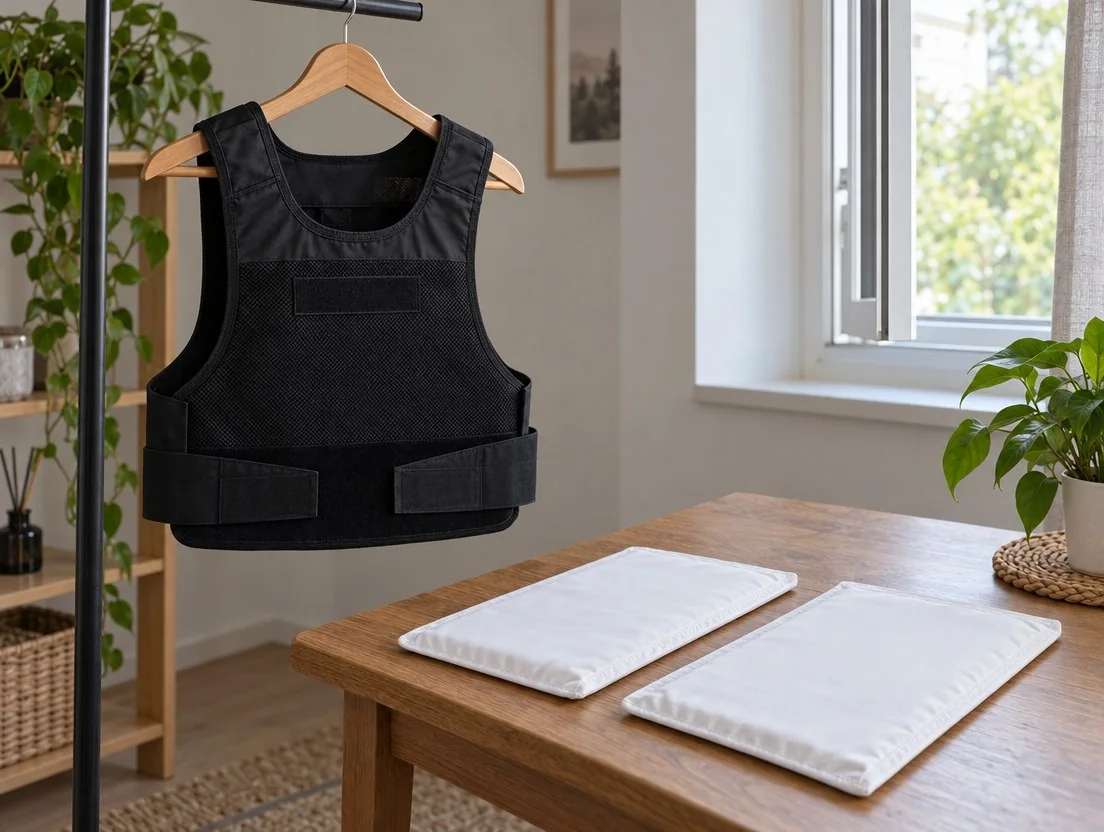
Air-dry only, in the shade, at room temperature. Never on a radiator, next to a heater, with a hair dryer, in a tumble dryer or in the sun: heat and ultraviolet harm both the carrier fabric and the pack.
Dry the carrier on a hanger or flat on a rack. A pack that did get wet in the rain is wiped, laid flat and left to dry on its own, without taking it out of its envelope.
How to store body armor
- Dry and cool. GOST specifies a dry, ventilated room for storage, 40-70 % humidity and 0 to 40 °C. At home that is a wardrobe, not a bathroom or a balcony.
- Flat, never folded. A pack is stored without creases: inside the carrier on a hanger or laid flat. A pack folded in half develops a crease line over time.
- Not in the car. In summer the cabin under the glass gets hotter than GOST allows, and for a UHMWPE pack that is the most harmful place of all.
- Out of the sun. Direct light from a window damages both the carrier and the pack.
What to check once a month
- The pack envelope. Cuts, abrasion, delamination at the edge. Through a damaged envelope, moisture and dirt reach the layers.
- Hook-and-loop. This is the most common complaint from owners of concealable vests: over time it holds worse. Clear it of lint and dust, and replace the straps or the carrier when it wears out.
- Straps and seams. Any tears, does the adjustment hold.
- The label. Model, class, size, serial number and production date must stay legible: the label links the vest to its passport and to the documents on the model.
Take the packs and plates fully out of the carrier and inspect them every six to twelve months.
Can body armor be repaired
The carrier - yes. Hook-and-loop and straps can be replaced, an opened seam restitched, and a badly worn carrier swapped for a new one. The ballistic pack - no. If it is cut, torn or has taken a bullet, it is replaced as a whole, even without penetration: the layers have already done their work. Cutting, re-stitching or trimming a pack to fit another carrier is not allowed: that changes the protection, and the documents on the pack no longer apply.
How long body armor lasts
The documents on a vest give three periods, and they are often confused.
Warranty storage period. Under GOST 34286-2017 - at least 5 years. That is how long the vest keeps its properties while it sits in the factory packaging in a warehouse.
Warranty service period. Under GOST - at least 1 year within the storage period. That is how long the manufacturer is liable for a vest that is being worn.
Service life. The manufacturer sets it in the product documentation; GOST gives no universal figure. For the whole service life the vest must keep its protective properties. Look it up in your vest's passport and on its label: a seller's reply in a marketplace chat does not set the service life.
Keep the passport together with the receipt. Under GOST, a quality claim is accepted only with the passport and only if the storage and use conditions were followed.
When the service life is over, the pack is replaced even if it looks intact.
Caring for IRON TACTICA vests
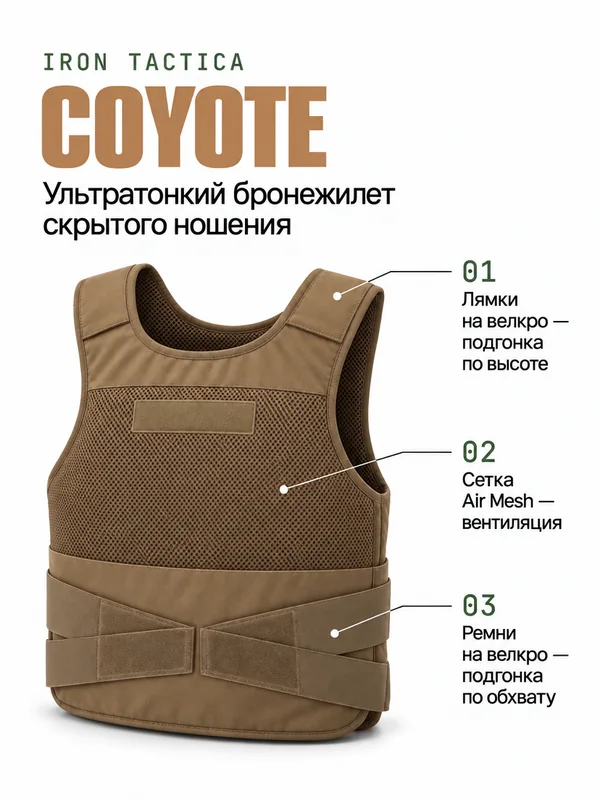
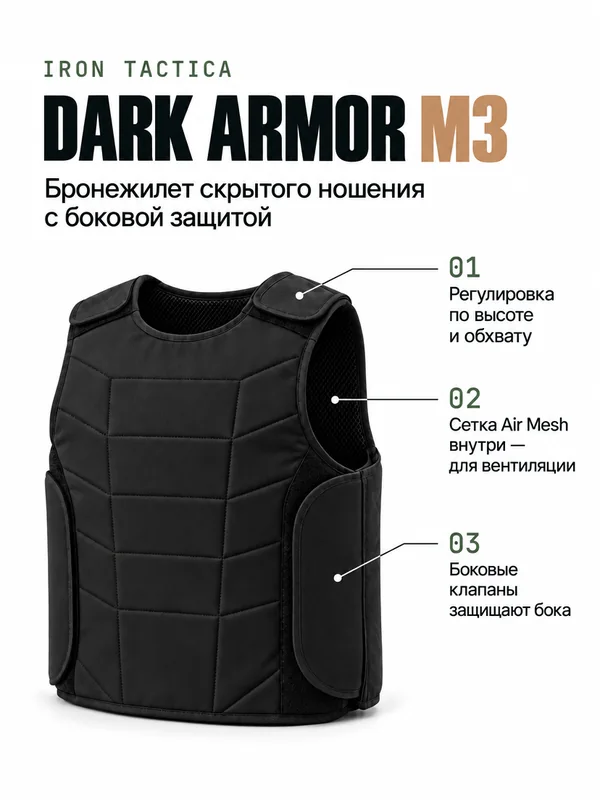
The carriers of our concealable vests are made of nylon with a three-dimensional AIR MESH lining inside, and the UHMWPE packs are removable. COYOTE has two of them, chest and back; in DARK ARMOR M-3 the packs also cover the sides. Before washing, take the packs out; wash the carrier at up to 40 °C, do not iron it, dry it in the shade. Keep the packs dry and flat, away from radiators and sun, and do not leave the vest in the car in summer.
If the carrier is worn out, the hook-and-loop no longer holds or the pack has reached the end of its life, call our toll-free line 8 800 101-76-37: tell us the model and how old it is, and we will advise what can be replaced and how.
Frequently asked questions
Can body armor go in the washing machine? The pack - never. The carrier without packs - only if the manufacturer allows it, on a delicate cycle, with no spin and no heat. Hand washing is safer.
What to do if the ballistic pack got wet? Wipe it, lay it flat in its envelope and let it dry at room temperature, without a radiator or a hair dryer. If the envelope is damaged or the pack stayed wet for a long time, ask the manufacturer whether it needs replacing.
What is the shelf life of body armor? Check the passport: it lists the warranty periods and the service life. Under GOST 34286-2017 the storage warranty is at least 5 years and the service warranty at least 1 year.
How to store body armor at home? In a dry wardrobe, flat, on a hanger or laid horizontally, away from radiators and windows. Not folded in half and not in the trunk of a car.
Can the Kevlar from body armor be washed? No. An aramid pack - Kevlar is a trade name for aramid - absorbs water and performs worse after washing. Only the carrier is washed.