Laws
Body Armor for Security Guards: What Russia's New Law Requires
· 6 min read · Andrey Sokolov
Since September 1, 2026, private security in Russia has worked under Federal Law 427-FZ. Domestically made protective vests became a licensing requirement for guarding people, sites and events, and response teams must wear them on call-outs. The law sets no protection class: the security company chooses it.
What a security company should prepare before a licensing check
- How many vests you need. Count by people on shift and response team crews, not by the staff list.
- Who owns them. You need documents showing the vests belong to the company or were transferred to it lawfully, for example under a lease.
- Where they come from. The law allows only domestically made vests, so keep the certificate with the manufacturer's address.
- Where they are kept. A response team's set stays in the car so nobody has to look for it on a call-out.
- Which class for which post. Write down the class chosen for each post and why.
Where this is written: the law and the licensing rules
Federal Law No. 427-FZ "On Private Security Activities" came into force on September 1, 2026. Article 23 lists the special equipment guards and bodyguards may use. Item seven is "special passive protection equipment (domestically produced protective vests and helmets)".
The details are in the licensing rules for private security companies approved by Government Resolution No. 781 of June 23, 2026. They apply from the same date. They say:
- A license applicant submits copies of documents showing it has vests and helmets. This covers protecting people's lives and health, guarding sites, keeping order at events and response team call-outs.
- The vests must belong to the company by ownership or on another lawful basis. An employee's personal vest does not meet the requirement without such a document.
- Response team guards use vests when responding at a protected site.
- A team that goes out without them commits a gross violation of the licensing requirements.
What protection class a security guard needs
Classes are set by GOST 34286-2017, and the law does not refer to it. The company picks the class to fit the post. How the handgun classes differ is covered in Br1 or Br2: What Each Protection Class Protects Against.
| Post | What matters most | Where to start |
|---|---|---|
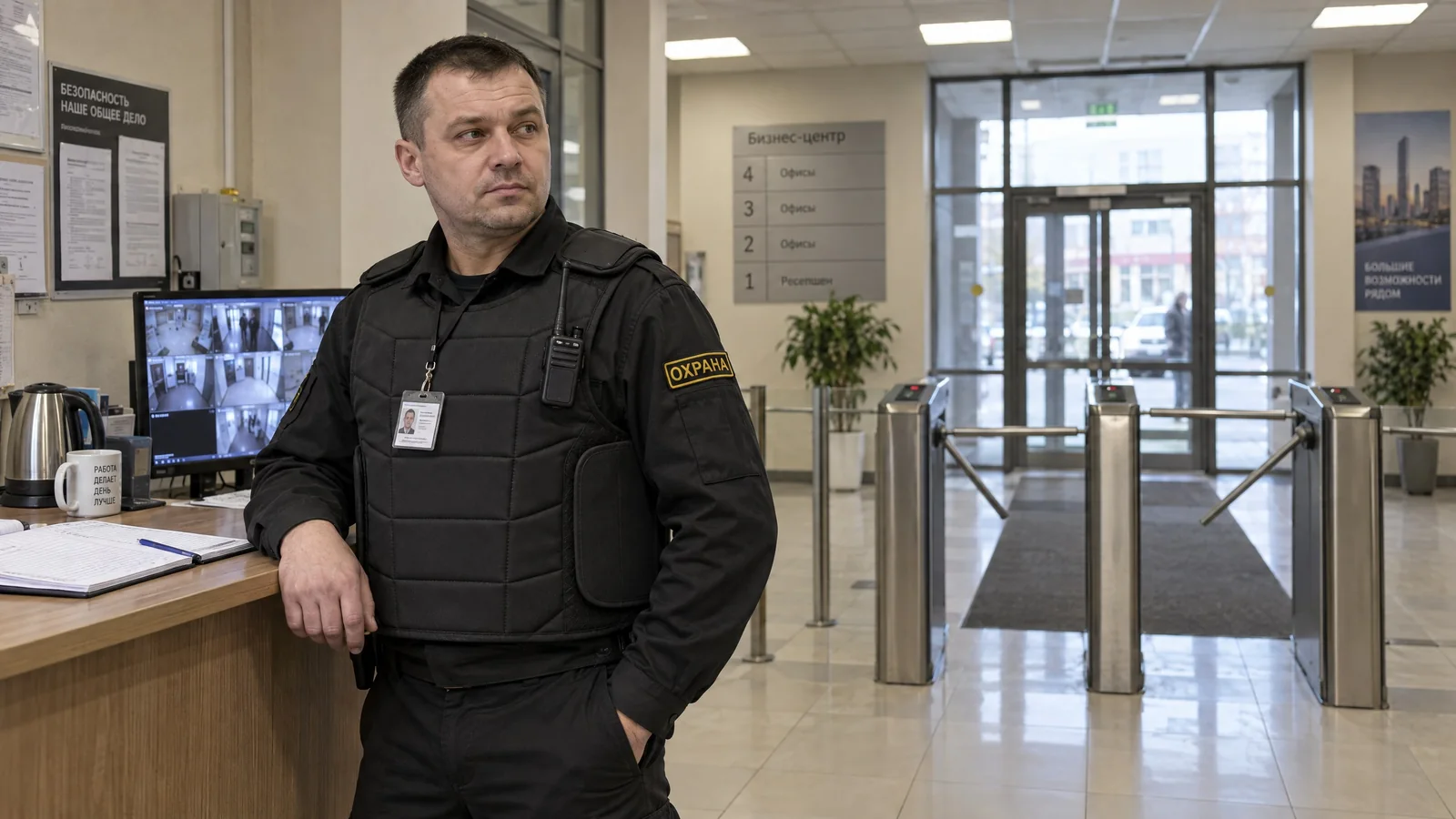
| Lobby, turnstile, 12-hour shift | weight, fit, ventilation | concealable vest, Br1 or Br2 |
| Response team | quick to put on in the car, side protection | Br2 with side flaps; a hard plate if rifles are a threat |
| Bodyguard, escort | the vest must not show | thin concealable vest, Br1 or Br2 |
| Events, entry control | mobility, stab protection | vest with class S in the certificate |
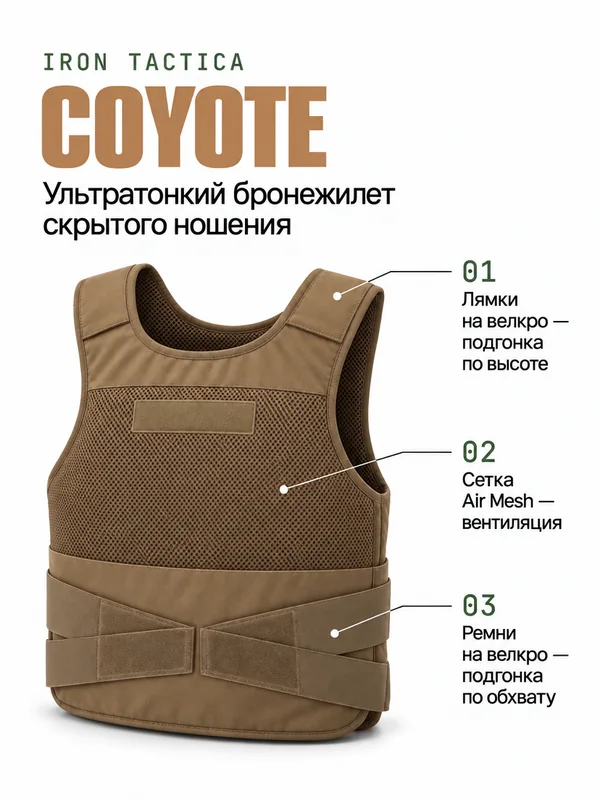
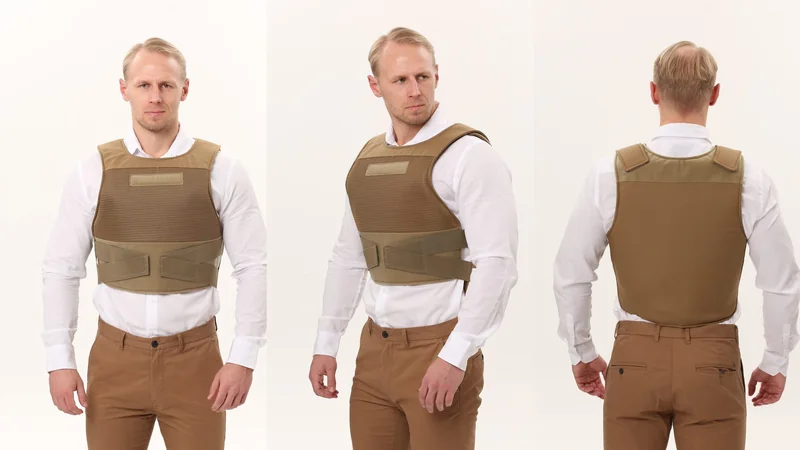
Indoor post. On a 12-hour shift the vest is worn all day, and the load falls on the back. A soft concealable vest is lighter than any vest with plates: COYOTE in Br1 weighs 1.4 kg according to our catalog. A vest in the wrong size presses and slides, so fit matters as much as the class.
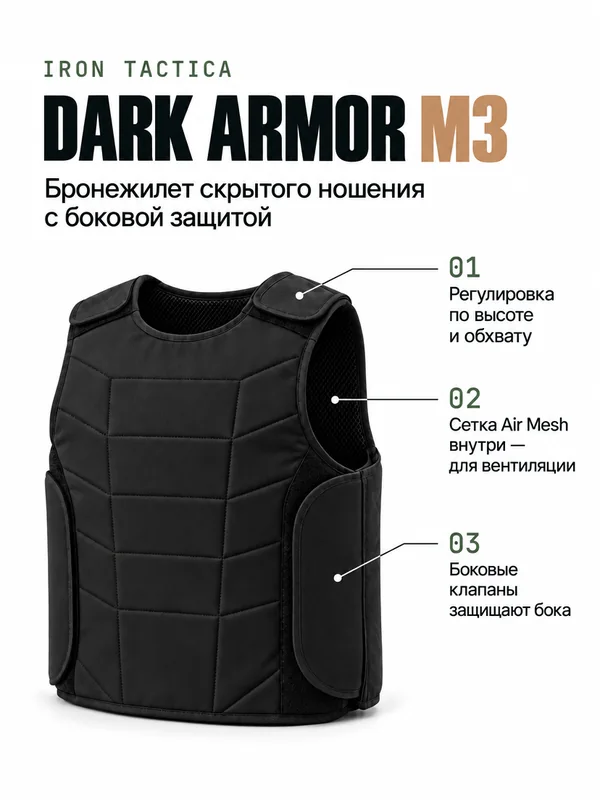
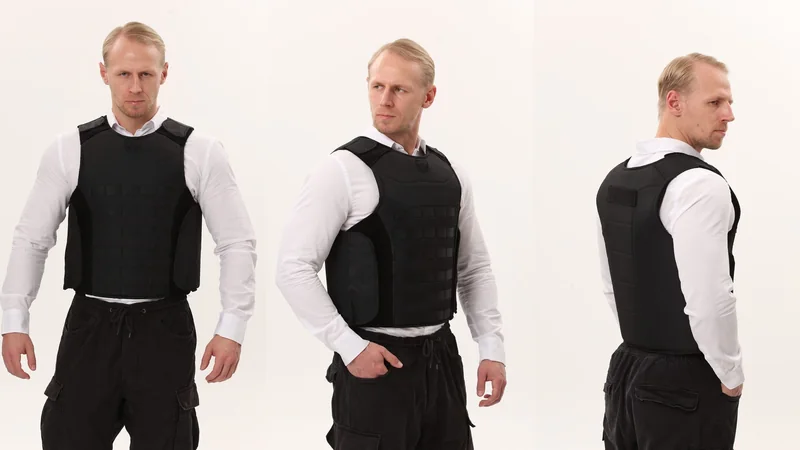
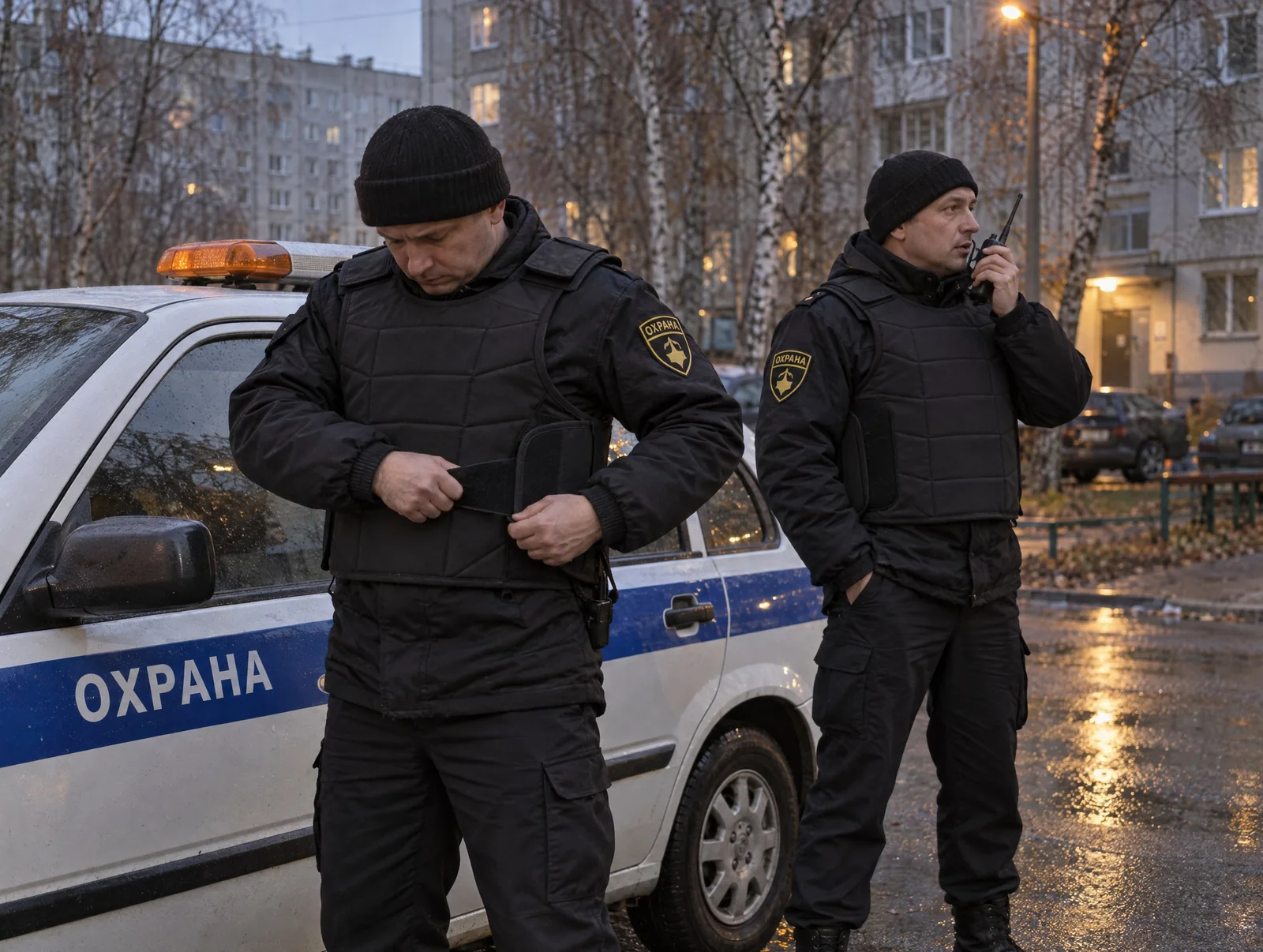
Response team. The vest goes on in a hurry, often in the car. It should fasten with hook-and-loop in seconds and not get in the way behind the wheel. Models with all-around protection, where the packs also cover the sides, are more convenient.
A soft ballistic pack stops handgun bullets; it is not designed for rifle bullets. If a team's tasks call for protection against assault rifles, it needs a hard plate rated Br4 or higher. In our models with plate pockets, protection goes up to Br5; plates are sold separately.
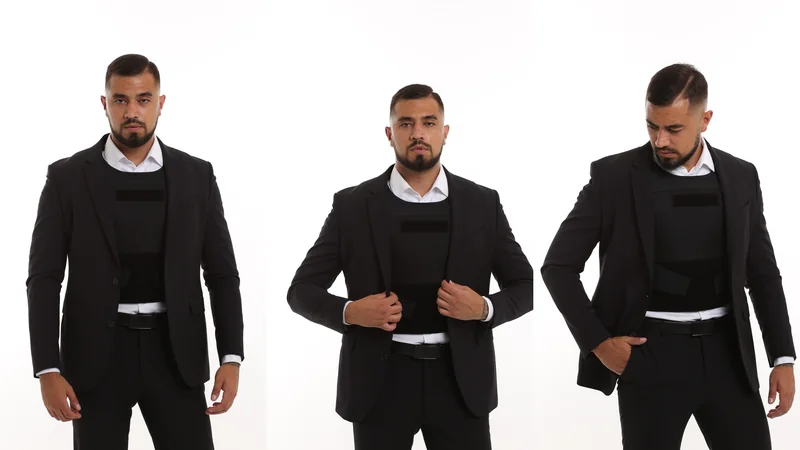
Bodyguard. The vest must not give the guard away or alarm guests. A concealable vest is worn under the shirt or over it under a jacket: a buttoned jacket hides the outline.

Events. At the entrance a knife or a shank is a more likely threat than a handgun. Stab protection is confirmed by class S: the pack is tested with a bayonet strike. Check for it in the certificate, not in the product description.
How to prove domestic production
The law requires domestically made vests but does not name the document that proves it. When buying, collect a set an inspector will understand:
- a certificate of conformity to GOST 34286-2017 with the manufacturer's name and address;
- the test report the certificate was issued on;
- sales documents naming the manufacturer or its official seller as the supplier.
A vest with no labels or papers bought from a classified ad proves neither its class nor its origin. We make our vests in our own workshop in Saint Petersburg. Copies of the certificate and test report come with every vest and are sent before purchase; a scan of the certificate is in the Documents section.
What to check when buying vests for a shift
- The class and how it is confirmed. Certificate number, validity period, the classes it lists.
- Sizes. Shifts include people of different builds, women among them. A vest two sizes too big slides and leaves the sides open.
- Weight of each size. Ask for a figure per size, not one number for the whole range.
- Ventilation and cover. Mesh on the inside and a removable cover you can wash separately from the pack.
- Adjustments. If vests stay with the post and shifts hand them over, they need height and girth adjustment.
IRON TACTICA vests for security
For posts and response teams, DARK ARMOR M-3 fits: class Br1 or Br2, packs all around with side protection, from $400. For an indoor shift, the lighter COYOTE Br1 starts from $367. Larger staff can get M-3 Big Size. Prices as of October 9, 2026.
We make any model to measure, for men and women, at no extra charge. Call 8 800 101-76-37 and tell us how many posts and shifts you have, where people stand and how many hours a day they wear the vest. We will pick models and sizes for each post.
Frequently asked questions
What protection class does a security guard need by law? The law sets no class. It requires the company to have domestic protective vests and response teams to use them on call-outs; the company chooses the class for the risks of each post.
Must a security company provide its guards with body armor? For guarding people, sites, events and for response teams, the company itself must have the vests, or it gets no license. The requirement is addressed to the licensed company.
Can a guard wear concealable body armor? The law speaks of domestically made protective vests and does not set a way of wearing them. What matters is the vest's origin and confirmed class; it can be worn over the uniform or under a shirt.
What happens if a response team goes out without vests? The licensing rules for private security companies list this as a gross violation of licensing requirements. "The vests were left at the base" will not help.